 67226bad15
### Context
We have a longstanding performance issue on Windows, where to this day,
the default heap allocator is still lockfull. With the number of cores
increasing, building and using LLVM with the default Windows heap
allocator is sub-optimal. Notably, the ThinLTO link times with LLD are
extremely long, and increase proportionally with the number of cores in
the machine.
In
a6a37a2fcd,
I introduced the ability build LLVM with several popular lock-free
allocators. Downstream users however have to build their own toolchain
with this option, and building an optimal toolchain is a bit tedious and
long. Additionally, LLVM is now integrated into Visual Studio, which
AFAIK re-distributes the vanilla LLVM binaries/installer. The point
being that many users are impacted and might not be aware of this
problem, or are unable to build a more optimal version of the toolchain.
The symptom before this PR is that most of the CPU time goes to the
kernel (darker blue) when linking with ThinLTO:
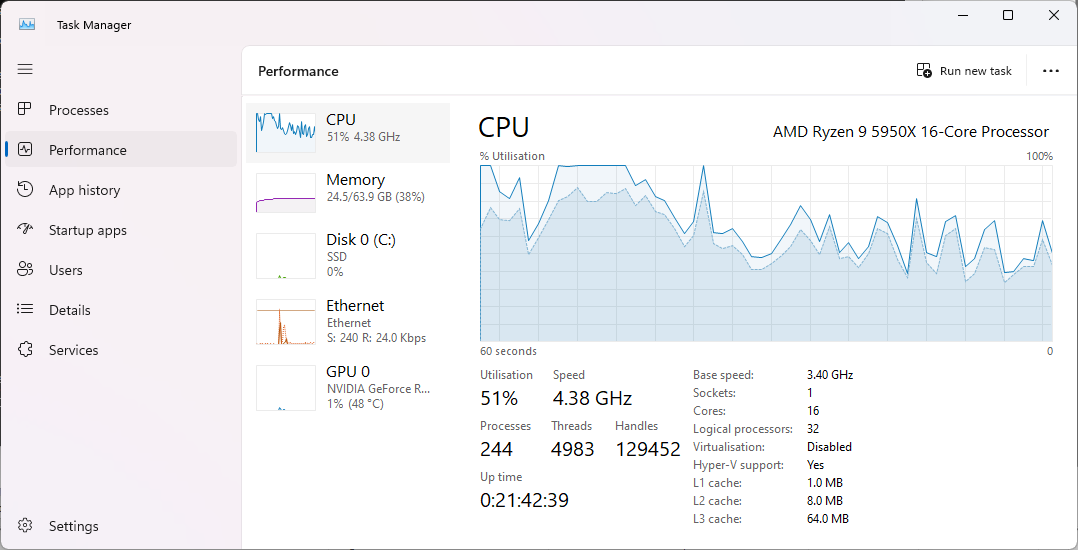
With this PR, most time is spent in user space (light blue):

On higher core count machines, before this PR, the CPU usage becomes
pretty much flat because of contention:
<img width="549" alt="VM_176_windows_heap"
src="https://github.com/llvm/llvm-project/assets/37383324/f27d5800-ee02-496d-a4e7-88177e0727f0">
With this PR, similarily most CPU time is now used:
<img width="549" alt="VM_176_with_rpmalloc"
src="https://github.com/llvm/llvm-project/assets/37383324/7d4785dd-94a7-4f06-9b16-aaa4e2e505c8">
### Changes in this PR
The avenue I've taken here is to vendor/re-licence rpmalloc in-tree, and
use it when building the Windows 64-bit release. Given the permissive
rpmalloc licence, prior discussions with the LLVM foundation and
@lattner suggested this vendoring. Rpmalloc's author (@mjansson) kindly
agreed to ~~donate~~ re-licence the rpmalloc code in LLVM (please do
correct me if I misinterpreted our past communications).
I've chosen rpmalloc because it's small and gives the best value
overall. The source code is only 4 .c files. Rpmalloc is statically
replacing the weak CRT alloc symbols at link time, and has no dynamic
patching like mimalloc. As an alternative, there were several
unsuccessfull attempts made by Russell Gallop to use SCUDO in the past,
please see thread in https://reviews.llvm.org/D86694. If later someone
comes up with a PR of similar performance that uses SCUDO, we could then
delete this vendored rpmalloc folder.
I've added a new cmake flag `LLVM_ENABLE_RPMALLOC` which essentialy sets
`LLVM_INTEGRATED_CRT_ALLOC` to the in-tree rpmalloc source.
### Performance
The most obvious test is profling a ThinLTO linking step with LLD. I've
used a Clang compilation as a testbed, ie.
```
set OPTS=/GS- /D_ITERATOR_DEBUG_LEVEL=0 -Xclang -O3 -fstrict-aliasing -march=native -flto=thin -fwhole-program-vtables -fuse-ld=lld
cmake -G Ninja %ROOT%/llvm -DCMAKE_BUILD_TYPE=Release -DLLVM_ENABLE_ASSERTIONS=TRUE -DLLVM_ENABLE_PROJECTS="clang" -DLLVM_ENABLE_PDB=ON -DLLVM_OPTIMIZED_TABLEGEN=ON -DCMAKE_C_COMPILER=clang-cl.exe -DCMAKE_CXX_COMPILER=clang-cl.exe -DCMAKE_LINKER=lld-link.exe -DLLVM_ENABLE_LLD=ON -DCMAKE_CXX_FLAGS="%OPTS%" -DCMAKE_C_FLAGS="%OPTS%" -DLLVM_ENABLE_LTO=THIN
```
I've profiled the linking step with no LTO cache, with Powershell, such
as:
```
Measure-Command { lld-link /nologo @CMakeFiles\clang.rsp /out:bin\clang.exe /implib:lib\clang.lib /pdb:bin\clang.pdb /version:0.0 /machine:x64 /STACK:10000000 /DEBUG /OPT:REF /OPT:ICF /INCREMENTAL:NO /subsystem:console /MANIFEST:EMBED,ID=1 }`
```
Timings:
| Machine | Allocator | Time to link |
|--------|--------|--------|
| 16c/32t AMD Ryzen 9 5950X | Windows Heap | 10 min 38 sec |
| | **Rpmalloc** | **4 min 11 sec** |
| 32c/64t AMD Ryzen Threadripper PRO 3975WX | Windows Heap | 23 min 29
sec |
| | **Rpmalloc** | **2 min 11 sec** |
| | **Rpmalloc + /threads:64** | **1 min 50 sec** |
| 176 vCPU (2 socket) Intel Xeon Platinium 8481C (fixed clock 2.7 GHz) |
Windows Heap | 43 min 40 sec |
| | **Rpmalloc** | **1 min 45 sec** |
This also improves the overall performance when building with clang-cl.
I've profiled a regular compilation of clang itself, ie:
```
set OPTS=/GS- /D_ITERATOR_DEBUG_LEVEL=0 /arch:AVX -fuse-ld=lld
cmake -G Ninja %ROOT%/llvm -DCMAKE_BUILD_TYPE=Release -DLLVM_ENABLE_ASSERTIONS=TRUE -DLLVM_ENABLE_PROJECTS="clang;lld" -DLLVM_ENABLE_PDB=ON -DLLVM_OPTIMIZED_TABLEGEN=ON -DCMAKE_C_COMPILER=clang-cl.exe -DCMAKE_CXX_COMPILER=clang-cl.exe -DCMAKE_LINKER=lld-link.exe -DLLVM_ENABLE_LLD=ON -DCMAKE_CXX_FLAGS="%OPTS%" -DCMAKE_C_FLAGS="%OPTS%"
```
This saves approx. 30 sec when building on the Threadripper PRO 3975WX:
```
(default Windows Heap)
C:\src\git\llvm-project>hyperfine -r 5 -p "make_llvm.bat stage1_test2" "ninja clang -C stage1_test2"
Benchmark 1: ninja clang -C stage1_test2
Time (mean ± σ): 392.716 s ± 3.830 s [User: 17734.025 s, System: 1078.674 s]
Range (min … max): 390.127 s … 399.449 s 5 runs
(rpmalloc)
C:\src\git\llvm-project>hyperfine -r 5 -p "make_llvm.bat stage1_test2" "ninja clang -C stage1_test2"
Benchmark 1: ninja clang -C stage1_test2
Time (mean ± σ): 360.824 s ± 1.162 s [User: 15148.637 s, System: 905.175 s]
Range (min … max): 359.208 s … 362.288 s 5 runs
```
1166 lines
48 KiB
ReStructuredText
1166 lines
48 KiB
ReStructuredText
========================
|
|
Building LLVM with CMake
|
|
========================
|
|
|
|
.. contents::
|
|
:local:
|
|
|
|
Introduction
|
|
============
|
|
|
|
`CMake <http://www.cmake.org/>`_ is a cross-platform build-generator tool. CMake
|
|
does not build the project, it generates the files needed by your build tool
|
|
(GNU make, Visual Studio, etc.) for building LLVM.
|
|
|
|
If **you are a new contributor**, please start with the :doc:`GettingStarted`
|
|
page. This page is geared for existing contributors moving from the
|
|
legacy configure/make system.
|
|
|
|
If you are really anxious about getting a functional LLVM build, go to the
|
|
`Quick start`_ section. If you are a CMake novice, start with `Basic CMake usage`_
|
|
and then go back to the `Quick start`_ section once you know what you are doing. The
|
|
`Options and variables`_ section is a reference for customizing your build. If
|
|
you already have experience with CMake, this is the recommended starting point.
|
|
|
|
This page is geared towards users of the LLVM CMake build. If you're looking for
|
|
information about modifying the LLVM CMake build system you may want to see the
|
|
:doc:`CMakePrimer` page. It has a basic overview of the CMake language.
|
|
|
|
.. _Quick start:
|
|
|
|
Quick start
|
|
===========
|
|
|
|
We use here the command-line, non-interactive CMake interface.
|
|
|
|
#. `Download <http://www.cmake.org/cmake/resources/software.html>`_ and install
|
|
CMake. Version 3.20.0 is the minimum required.
|
|
|
|
#. Open a shell. Your development tools must be reachable from this shell
|
|
through the PATH environment variable.
|
|
|
|
#. Create a build directory. Building LLVM in the source
|
|
directory is not supported. cd to this directory:
|
|
|
|
.. code-block:: console
|
|
|
|
$ mkdir mybuilddir
|
|
$ cd mybuilddir
|
|
|
|
#. Execute this command in the shell replacing `path/to/llvm/source/root` with
|
|
the path to the root of your LLVM source tree:
|
|
|
|
.. code-block:: console
|
|
|
|
$ cmake path/to/llvm/source/root
|
|
|
|
CMake will detect your development environment, perform a series of tests, and
|
|
generate the files required for building LLVM. CMake will use default values
|
|
for all build parameters. See the `Options and variables`_ section for
|
|
a list of build parameters that you can modify.
|
|
|
|
This can fail if CMake can't detect your toolset, or if it thinks that the
|
|
environment is not sane enough. In this case, make sure that the toolset that
|
|
you intend to use is the only one reachable from the shell, and that the shell
|
|
itself is the correct one for your development environment. CMake will refuse
|
|
to build MinGW makefiles if you have a POSIX shell reachable through the PATH
|
|
environment variable, for instance. You can force CMake to use a given build
|
|
tool; for instructions, see the `Usage`_ section, below. You may
|
|
also wish to control which targets LLVM enables, or which LLVM
|
|
components are built; see the `Frequently Used LLVM-related
|
|
variables`_ below.
|
|
|
|
#. After CMake has finished running, proceed to use IDE project files, or start
|
|
the build from the build directory:
|
|
|
|
.. code-block:: console
|
|
|
|
$ cmake --build .
|
|
|
|
The ``--build`` option tells ``cmake`` to invoke the underlying build
|
|
tool (``make``, ``ninja``, ``xcodebuild``, ``msbuild``, etc.)
|
|
|
|
The underlying build tool can be invoked directly, of course, but
|
|
the ``--build`` option is portable.
|
|
|
|
#. After LLVM has finished building, install it from the build directory:
|
|
|
|
.. code-block:: console
|
|
|
|
$ cmake --build . --target install
|
|
|
|
The ``--target`` option with ``install`` parameter in addition to
|
|
the ``--build`` option tells ``cmake`` to build the ``install`` target.
|
|
|
|
It is possible to set a different install prefix at installation time
|
|
by invoking the ``cmake_install.cmake`` script generated in the
|
|
build directory:
|
|
|
|
.. code-block:: console
|
|
|
|
$ cmake -DCMAKE_INSTALL_PREFIX=/tmp/llvm -P cmake_install.cmake
|
|
|
|
.. _Basic CMake usage:
|
|
.. _Usage:
|
|
|
|
Basic CMake usage
|
|
=================
|
|
|
|
This section explains basic aspects of CMake
|
|
which you may need in your day-to-day usage.
|
|
|
|
CMake comes with extensive documentation, in the form of html files, and as
|
|
online help accessible via the ``cmake`` executable itself. Execute ``cmake
|
|
--help`` for further help options.
|
|
|
|
CMake allows you to specify a build tool (e.g., GNU make, Visual Studio,
|
|
or Xcode). If not specified on the command line, CMake tries to guess which
|
|
build tool to use, based on your environment. Once it has identified your
|
|
build tool, CMake uses the corresponding *Generator* to create files for your
|
|
build tool (e.g., Makefiles or Visual Studio or Xcode project files). You can
|
|
explicitly specify the generator with the command line option ``-G "Name of the
|
|
generator"``. To see a list of the available generators on your system, execute
|
|
|
|
.. code-block:: console
|
|
|
|
$ cmake --help
|
|
|
|
This will list the generator names at the end of the help text.
|
|
|
|
Generators' names are case-sensitive, and may contain spaces. For this reason,
|
|
you should enter them exactly as they are listed in the ``cmake --help``
|
|
output, in quotes. For example, to generate project files specifically for
|
|
Visual Studio 12, you can execute:
|
|
|
|
.. code-block:: console
|
|
|
|
$ cmake -G "Visual Studio 12" path/to/llvm/source/root
|
|
|
|
For a given development platform there can be more than one adequate
|
|
generator. If you use Visual Studio, "NMake Makefiles" is a generator you can use
|
|
for building with NMake. By default, CMake chooses the most specific generator
|
|
supported by your development environment. If you want an alternative generator,
|
|
you must tell this to CMake with the ``-G`` option.
|
|
|
|
.. todo::
|
|
|
|
Explain variables and cache. Move explanation here from #options section.
|
|
|
|
.. _Options and variables:
|
|
|
|
Options and variables
|
|
=====================
|
|
|
|
Variables customize how the build will be generated. Options are boolean
|
|
variables, with possible values ON/OFF. Options and variables are defined on the
|
|
CMake command line like this:
|
|
|
|
.. code-block:: console
|
|
|
|
$ cmake -DVARIABLE=value path/to/llvm/source
|
|
|
|
You can set a variable after the initial CMake invocation to change its
|
|
value. You can also undefine a variable:
|
|
|
|
.. code-block:: console
|
|
|
|
$ cmake -UVARIABLE path/to/llvm/source
|
|
|
|
Variables are stored in the CMake cache. This is a file named ``CMakeCache.txt``
|
|
stored at the root of your build directory that is generated by ``cmake``.
|
|
Editing it yourself is not recommended.
|
|
|
|
Variables are listed in the CMake cache and later in this document with
|
|
the variable name and type separated by a colon. You can also specify the
|
|
variable and type on the CMake command line:
|
|
|
|
.. code-block:: console
|
|
|
|
$ cmake -DVARIABLE:TYPE=value path/to/llvm/source
|
|
|
|
.. _cmake_frequently_used_variables:
|
|
|
|
Frequently-used CMake variables
|
|
-------------------------------
|
|
|
|
Here are some of the CMake variables that are used often, along with a
|
|
brief explanation. For full documentation, consult the CMake manual,
|
|
or execute ``cmake --help-variable VARIABLE_NAME``. See `Frequently
|
|
Used LLVM-related Variables`_ below for information about commonly
|
|
used variables that control features of LLVM and enabled subprojects.
|
|
|
|
.. _cmake_build_type:
|
|
|
|
**CMAKE_BUILD_TYPE**:STRING
|
|
This configures the optimization level for ``make`` or ``ninja`` builds.
|
|
|
|
Possible values:
|
|
|
|
=========================== ============= ========== ========== ==========================
|
|
Build Type Optimizations Debug Info Assertions Best suited for
|
|
=========================== ============= ========== ========== ==========================
|
|
**Release** For Speed No No Users of LLVM and Clang
|
|
**Debug** None Yes Yes Developers of LLVM
|
|
**RelWithDebInfo** For Speed Yes No Users that also need Debug
|
|
**MinSizeRel** For Size No No When disk space matters
|
|
=========================== ============= ========== ========== ==========================
|
|
|
|
* Optimizations make LLVM/Clang run faster, but can be an impediment for
|
|
step-by-step debugging.
|
|
* Builds with debug information can use a lot of RAM and disk space and is
|
|
usually slower to run. You can improve RAM usage by using ``lld``, see
|
|
the :ref:`LLVM_USE_LINKER <llvm_use_linker>` option.
|
|
* Assertions are internal checks to help you find bugs. They typically slow
|
|
down LLVM and Clang when enabled, but can be useful during development.
|
|
You can manually set :ref:`LLVM_ENABLE_ASSERTIONS <llvm_enable_assertions>`
|
|
to override the default from `CMAKE_BUILD_TYPE`.
|
|
|
|
If you are using an IDE such as Visual Studio or Xcode, you should use
|
|
the IDE settings to set the build type.
|
|
|
|
**CMAKE_INSTALL_PREFIX**:PATH
|
|
Path where LLVM will be installed when the "install" target is built.
|
|
|
|
**CMAKE_{C,CXX}_FLAGS**:STRING
|
|
Extra flags to use when compiling C and C++ source files respectively.
|
|
|
|
**CMAKE_{C,CXX}_COMPILER**:STRING
|
|
Specify the C and C++ compilers to use. If you have multiple
|
|
compilers installed, CMake might not default to the one you wish to
|
|
use.
|
|
|
|
.. _Frequently Used LLVM-related variables:
|
|
|
|
Frequently Used LLVM-related variables
|
|
--------------------------------------
|
|
|
|
The default configuration may not match your requirements. Here are
|
|
LLVM variables that are frequently used to control that. The full
|
|
description is in `LLVM-related variables`_ below.
|
|
|
|
**LLVM_ENABLE_PROJECTS**:STRING
|
|
Control which projects are enabled. For example you may want to work on clang
|
|
or lldb by specifying ``-DLLVM_ENABLE_PROJECTS="clang;lldb"``.
|
|
|
|
**LLVM_ENABLE_RUNTIMES**:STRING
|
|
Control which runtimes are enabled. For example you may want to work on
|
|
libc++ or libc++abi by specifying ``-DLLVM_ENABLE_RUNTIMES="libcxx;libcxxabi"``.
|
|
|
|
**LLVM_LIBDIR_SUFFIX**:STRING
|
|
Extra suffix to append to the directory where libraries are to be
|
|
installed. On a 64-bit architecture, one could use ``-DLLVM_LIBDIR_SUFFIX=64``
|
|
to install libraries to ``/usr/lib64``.
|
|
|
|
**LLVM_PARALLEL_{COMPILE,LINK}_JOBS**:STRING
|
|
Building the llvm toolchain can use a lot of resources, particularly
|
|
linking. These options, when you use the Ninja generator, allow you
|
|
to restrict the parallelism. For example, to avoid OOMs or going
|
|
into swap, permit only one link job per 15GB of RAM available on a
|
|
32GB machine, specify ``-G Ninja -DLLVM_PARALLEL_LINK_JOBS=2``.
|
|
|
|
**LLVM_TARGETS_TO_BUILD**:STRING
|
|
Control which targets are enabled. For example you may only need to enable
|
|
your native target with, for example, ``-DLLVM_TARGETS_TO_BUILD=X86``.
|
|
|
|
.. _llvm_use_linker:
|
|
|
|
**LLVM_USE_LINKER**:STRING
|
|
Override the system's default linker. For instance use ``lld`` with
|
|
``-DLLVM_USE_LINKER=lld``.
|
|
|
|
Rarely-used CMake variables
|
|
---------------------------
|
|
|
|
Here are some of the CMake variables that are rarely used, along with a brief
|
|
explanation and LLVM-related notes. For full documentation, consult the CMake
|
|
manual, or execute ``cmake --help-variable VARIABLE_NAME``.
|
|
|
|
**CMAKE_CXX_STANDARD**:STRING
|
|
Sets the C++ standard to conform to when building LLVM. Possible values are
|
|
17 and 20. LLVM Requires C++17 or higher. This defaults to 17.
|
|
|
|
**CMAKE_INSTALL_BINDIR**:PATH
|
|
The path to install executables, relative to the *CMAKE_INSTALL_PREFIX*.
|
|
Defaults to "bin".
|
|
|
|
**CMAKE_INSTALL_DOCDIR**:PATH
|
|
The path to install documentation, relative to the *CMAKE_INSTALL_PREFIX*.
|
|
Defaults to "share/doc".
|
|
|
|
**CMAKE_INSTALL_INCLUDEDIR**:PATH
|
|
The path to install header files, relative to the *CMAKE_INSTALL_PREFIX*.
|
|
Defaults to "include".
|
|
|
|
**CMAKE_INSTALL_MANDIR**:PATH
|
|
The path to install manpage files, relative to the *CMAKE_INSTALL_PREFIX*.
|
|
Defaults to "share/man".
|
|
|
|
.. _LLVM-related variables:
|
|
|
|
LLVM-related variables
|
|
-----------------------
|
|
|
|
These variables provide fine control over the build of LLVM and
|
|
enabled sub-projects. Nearly all of these variable names begin with
|
|
``LLVM_``.
|
|
|
|
**BUILD_SHARED_LIBS**:BOOL
|
|
Flag indicating if each LLVM component (e.g. Support) is built as a shared
|
|
library (ON) or as a static library (OFF). Its default value is OFF. On
|
|
Windows, shared libraries may be used when building with MinGW, including
|
|
mingw-w64, but not when building with the Microsoft toolchain.
|
|
|
|
.. note:: BUILD_SHARED_LIBS is only recommended for use by LLVM developers.
|
|
If you want to build LLVM as a shared library, you should use the
|
|
``LLVM_BUILD_LLVM_DYLIB`` option.
|
|
|
|
**LLVM_ABI_BREAKING_CHECKS**:STRING
|
|
Used to decide if LLVM should be built with ABI breaking checks or
|
|
not. Allowed values are `WITH_ASSERTS` (default), `FORCE_ON` and
|
|
`FORCE_OFF`. `WITH_ASSERTS` turns on ABI breaking checks in an
|
|
assertion enabled build. `FORCE_ON` (`FORCE_OFF`) turns them on
|
|
(off) irrespective of whether normal (`NDEBUG`-based) assertions are
|
|
enabled or not. A version of LLVM built with ABI breaking checks
|
|
is not ABI compatible with a version built without it.
|
|
|
|
**LLVM_ADDITIONAL_BUILD_TYPES**:LIST
|
|
Adding a semicolon separated list of additional build types to this flag
|
|
allows for them to be specified as values in CMAKE_BUILD_TYPE without
|
|
encountering a fatal error during the configuration process.
|
|
|
|
**LLVM_APPEND_VC_REV**:BOOL
|
|
Embed version control revision info (Git revision id).
|
|
The version info is provided by the ``LLVM_REVISION`` macro in
|
|
``llvm/include/llvm/Support/VCSRevision.h``. Developers using git who don't
|
|
need revision info can disable this option to avoid re-linking most binaries
|
|
after a branch switch. Defaults to ON.
|
|
|
|
**LLVM_FORCE_VC_REPOSITORY**:STRING
|
|
Set the git repository to include in version info rather than calling git to
|
|
determine it.
|
|
|
|
**LLVM_FORCE_VC_REVISION**:STRING
|
|
Force a specific Git revision id rather than calling to git to determine it.
|
|
This is useful in environments where git is not available or non-functional
|
|
but the VC revision is available through other means.
|
|
|
|
**LLVM_BUILD_32_BITS**:BOOL
|
|
Build 32-bit executables and libraries on 64-bit systems. This option is
|
|
available only on some 64-bit Unix systems. Defaults to OFF.
|
|
|
|
**LLVM_BUILD_BENCHMARKS**:BOOL
|
|
Adds benchmarks to the list of default targets. Defaults to OFF.
|
|
|
|
**LLVM_BUILD_DOCS**:BOOL
|
|
Adds all *enabled* documentation targets (i.e. Doxgyen and Sphinx targets) as
|
|
dependencies of the default build targets. This results in all of the (enabled)
|
|
documentation targets being as part of a normal build. If the ``install``
|
|
target is run then this also enables all built documentation targets to be
|
|
installed. Defaults to OFF. To enable a particular documentation target, see
|
|
LLVM_ENABLE_SPHINX and LLVM_ENABLE_DOXYGEN.
|
|
|
|
**LLVM_BUILD_EXAMPLES**:BOOL
|
|
Build LLVM examples. Defaults to OFF. Targets for building each example are
|
|
generated in any case. See documentation for *LLVM_BUILD_TOOLS* above for more
|
|
details.
|
|
|
|
**LLVM_BUILD_INSTRUMENTED_COVERAGE**:BOOL
|
|
If enabled, `source-based code coverage
|
|
<https://clang.llvm.org/docs/SourceBasedCodeCoverage.html>`_ instrumentation
|
|
is enabled while building llvm. If CMake can locate the code coverage
|
|
scripts and the llvm-cov and llvm-profdata tools that pair to your compiler,
|
|
the build will also generate the `generate-coverage-report` target to generate
|
|
the code coverage report for LLVM, and the `clear-profile-data` utility target
|
|
to delete captured profile data. See documentation for
|
|
*LLVM_CODE_COVERAGE_TARGETS* and *LLVM_COVERAGE_SOURCE_DIRS* for more
|
|
information on configuring code coverage reports.
|
|
|
|
**LLVM_BUILD_LLVM_DYLIB**:BOOL
|
|
If enabled, the target for building the libLLVM shared library is added.
|
|
This library contains all of LLVM's components in a single shared library.
|
|
Defaults to OFF. This cannot be used in conjunction with BUILD_SHARED_LIBS.
|
|
Tools will only be linked to the libLLVM shared library if LLVM_LINK_LLVM_DYLIB
|
|
is also ON.
|
|
The components in the library can be customised by setting LLVM_DYLIB_COMPONENTS
|
|
to a list of the desired components.
|
|
This option is not available on Windows.
|
|
|
|
**LLVM_BUILD_TESTS**:BOOL
|
|
Include LLVM unit tests in the 'all' build target. Defaults to OFF. Targets
|
|
for building each unit test are generated in any case. You can build a
|
|
specific unit test using the targets defined under *unittests*, such as
|
|
ADTTests, IRTests, SupportTests, etc. (Search for ``add_llvm_unittest`` in
|
|
the subdirectories of *unittests* for a complete list of unit tests.) It is
|
|
possible to build all unit tests with the target *UnitTests*.
|
|
|
|
**LLVM_BUILD_TOOLS**:BOOL
|
|
Build LLVM tools. Defaults to ON. Targets for building each tool are generated
|
|
in any case. You can build a tool separately by invoking its target. For
|
|
example, you can build *llvm-as* with a Makefile-based system by executing *make
|
|
llvm-as* at the root of your build directory.
|
|
|
|
**LLVM_CCACHE_BUILD**:BOOL
|
|
If enabled and the ``ccache`` program is available, then LLVM will be
|
|
built using ``ccache`` to speed up rebuilds of LLVM and its components.
|
|
Defaults to OFF. The size and location of the cache maintained
|
|
by ``ccache`` can be adjusted via the LLVM_CCACHE_MAXSIZE and LLVM_CCACHE_DIR
|
|
options, which are passed to the CCACHE_MAXSIZE and CCACHE_DIR environment
|
|
variables, respectively.
|
|
|
|
**LLVM_CODE_COVERAGE_TARGETS**:STRING
|
|
If set to a semicolon separated list of targets, those targets will be used
|
|
to drive the code coverage reports. If unset, the target list will be
|
|
constructed using the LLVM build's CMake export list.
|
|
|
|
**LLVM_COVERAGE_SOURCE_DIRS**:STRING
|
|
If set to a semicolon separated list of directories, the coverage reports
|
|
will limit code coverage summaries to just the listed directories. If unset,
|
|
coverage reports will include all sources identified by the tooling.
|
|
|
|
**LLVM_CREATE_XCODE_TOOLCHAIN**:BOOL
|
|
macOS Only: If enabled CMake will generate a target named
|
|
'install-xcode-toolchain'. This target will create a directory at
|
|
$CMAKE_INSTALL_PREFIX/Toolchains containing an xctoolchain directory which can
|
|
be used to override the default system tools.
|
|
|
|
**LLVM_DEFAULT_TARGET_TRIPLE**:STRING
|
|
LLVM target to use for code generation when no target is explicitly specified.
|
|
It defaults to "host", meaning that it shall pick the architecture
|
|
of the machine where LLVM is being built. If you are building a cross-compiler,
|
|
set it to the target triple of your desired architecture.
|
|
|
|
**LLVM_DOXYGEN_QCH_FILENAME**:STRING
|
|
The filename of the Qt Compressed Help file that will be generated when
|
|
``-DLLVM_ENABLE_DOXYGEN=ON`` and
|
|
``-DLLVM_ENABLE_DOXYGEN_QT_HELP=ON`` are given. Defaults to
|
|
``org.llvm.qch``.
|
|
This option is only useful in combination with
|
|
``-DLLVM_ENABLE_DOXYGEN_QT_HELP=ON``;
|
|
otherwise it has no effect.
|
|
|
|
**LLVM_DOXYGEN_QHELPGENERATOR_PATH**:STRING
|
|
The path to the ``qhelpgenerator`` executable. Defaults to whatever CMake's
|
|
``find_program()`` can find. This option is only useful in combination with
|
|
``-DLLVM_ENABLE_DOXYGEN_QT_HELP=ON``; otherwise it has no
|
|
effect.
|
|
|
|
**LLVM_DOXYGEN_QHP_CUST_FILTER_NAME**:STRING
|
|
See `Qt Help Project`_ for
|
|
more information. Defaults to the CMake variable ``${PACKAGE_STRING}`` which
|
|
is a combination of the package name and version string. This filter can then
|
|
be used in Qt Creator to select only documentation from LLVM when browsing
|
|
through all the help files that you might have loaded. This option is only
|
|
useful in combination with ``-DLLVM_ENABLE_DOXYGEN_QT_HELP=ON``;
|
|
otherwise it has no effect.
|
|
|
|
.. _Qt Help Project: http://qt-project.org/doc/qt-4.8/qthelpproject.html#custom-filters
|
|
|
|
**LLVM_DOXYGEN_QHP_NAMESPACE**:STRING
|
|
Namespace under which the intermediate Qt Help Project file lives. See `Qt
|
|
Help Project`_
|
|
for more information. Defaults to "org.llvm". This option is only useful in
|
|
combination with ``-DLLVM_ENABLE_DOXYGEN_QT_HELP=ON``; otherwise
|
|
it has no effect.
|
|
|
|
**LLVM_DOXYGEN_SVG**:BOOL
|
|
Uses .svg files instead of .png files for graphs in the Doxygen output.
|
|
Defaults to OFF.
|
|
|
|
.. _llvm_enable_assertions:
|
|
|
|
**LLVM_ENABLE_ASSERTIONS**:BOOL
|
|
Enables code assertions. Defaults to ON if and only if ``CMAKE_BUILD_TYPE``
|
|
is *Debug*.
|
|
|
|
**LLVM_ENABLE_BINDINGS**:BOOL
|
|
If disabled, do not try to build the OCaml bindings.
|
|
|
|
**LLVM_ENABLE_DIA_SDK**:BOOL
|
|
Enable building with MSVC DIA SDK for PDB debugging support. Available
|
|
only with MSVC. Defaults to ON.
|
|
|
|
**LLVM_ENABLE_DOXYGEN**:BOOL
|
|
Enables the generation of browsable HTML documentation using doxygen.
|
|
Defaults to OFF.
|
|
|
|
**LLVM_ENABLE_DOXYGEN_QT_HELP**:BOOL
|
|
Enables the generation of a Qt Compressed Help file. Defaults to OFF.
|
|
This affects the make target ``doxygen-llvm``. When enabled, apart from
|
|
the normal HTML output generated by doxygen, this will produce a QCH file
|
|
named ``org.llvm.qch``. You can then load this file into Qt Creator.
|
|
This option is only useful in combination with ``-DLLVM_ENABLE_DOXYGEN=ON``;
|
|
otherwise this has no effect.
|
|
|
|
**LLVM_ENABLE_EH**:BOOL
|
|
Build LLVM with exception-handling support. This is necessary if you wish to
|
|
link against LLVM libraries and make use of C++ exceptions in your own code
|
|
that need to propagate through LLVM code. Defaults to OFF.
|
|
|
|
**LLVM_ENABLE_EXPENSIVE_CHECKS**:BOOL
|
|
Enable additional time/memory expensive checking. Defaults to OFF.
|
|
|
|
**LLVM_ENABLE_FFI**:BOOL
|
|
Indicates whether the LLVM Interpreter will be linked with the Foreign Function
|
|
Interface library (libffi) in order to enable calling external functions.
|
|
If the library or its headers are installed in a custom
|
|
location, you can also set the variables FFI_INCLUDE_DIR and
|
|
FFI_LIBRARY_DIR to the directories where ffi.h and libffi.so can be found,
|
|
respectively. Defaults to OFF.
|
|
|
|
**LLVM_ENABLE_HTTPLIB**:BOOL
|
|
Enables the optional cpp-httplib dependency which is used by llvm-debuginfod
|
|
to serve debug info over HTTP. `cpp-httplib <https://github.com/yhirose/cpp-httplib>`_
|
|
must be installed, or `httplib_ROOT` must be set. Defaults to OFF.
|
|
|
|
**LLVM_ENABLE_IDE**:BOOL
|
|
Tell the build system that an IDE is being used. This in turn disables the
|
|
creation of certain convenience build system targets, such as the various
|
|
``install-*`` and ``check-*`` targets, since IDEs don't always deal well with
|
|
a large number of targets. This is usually autodetected, but it can be
|
|
configured manually to explicitly control the generation of those targets.
|
|
|
|
**LLVM_ENABLE_LIBCXX**:BOOL
|
|
If the host compiler and linker supports the stdlib flag, -stdlib=libc++ is
|
|
passed to invocations of both so that the project is built using libc++
|
|
instead of stdlibc++. Defaults to OFF.
|
|
|
|
**LLVM_ENABLE_LIBPFM**:BOOL
|
|
Enable building with libpfm to support hardware counter measurements in LLVM
|
|
tools.
|
|
Defaults to ON.
|
|
|
|
**LLVM_ENABLE_LLD**:BOOL
|
|
This option is equivalent to `-DLLVM_USE_LINKER=lld`, except during a 2-stage
|
|
build where a dependency is added from the first stage to the second ensuring
|
|
that lld is built before stage2 begins.
|
|
|
|
**LLVM_ENABLE_LLVM_LIBC**: BOOL
|
|
If the LLVM libc overlay is installed in a location where the host linker
|
|
can access it, all built executables will be linked against the LLVM libc
|
|
overlay before linking against the system libc. Defaults to OFF.
|
|
|
|
**LLVM_ENABLE_LTO**:STRING
|
|
Add ``-flto`` or ``-flto=`` flags to the compile and link command
|
|
lines, enabling link-time optimization. Possible values are ``Off``,
|
|
``On``, ``Thin`` and ``Full``. Defaults to OFF.
|
|
|
|
**LLVM_ENABLE_MODULES**:BOOL
|
|
Compile with `Clang Header Modules
|
|
<https://clang.llvm.org/docs/Modules.html>`_.
|
|
|
|
**LLVM_ENABLE_PEDANTIC**:BOOL
|
|
Enable pedantic mode. This disables compiler-specific extensions, if
|
|
possible. Defaults to ON.
|
|
|
|
**LLVM_ENABLE_PIC**:BOOL
|
|
Add the ``-fPIC`` flag to the compiler command-line, if the compiler supports
|
|
this flag. Some systems, like Windows, do not need this flag. Defaults to ON.
|
|
|
|
**LLVM_ENABLE_PROJECTS**:STRING
|
|
Semicolon-separated list of projects to build, or *all* for building all
|
|
(clang, lldb, lld, polly, etc) projects. This flag assumes that projects
|
|
are checked out side-by-side and not nested, i.e. clang needs to be in
|
|
parallel of llvm instead of nested in `llvm/tools`. This feature allows
|
|
to have one build for only LLVM and another for clang+llvm using the same
|
|
source checkout.
|
|
The full list is:
|
|
``clang;clang-tools-extra;cross-project-tests;libc;libclc;lld;lldb;openmp;polly;pstl``
|
|
|
|
**LLVM_ENABLE_RTTI**:BOOL
|
|
Build LLVM with run-time type information. Defaults to OFF.
|
|
|
|
**LLVM_ENABLE_RUNTIMES**:STRING
|
|
Build libc++, libc++abi, libunwind or compiler-rt using the just-built compiler.
|
|
This is the correct way to build runtimes when putting together a toolchain.
|
|
It will build the builtins separately from the other runtimes to preserve
|
|
correct dependency ordering. If you want to build the runtimes using a system
|
|
compiler, see the `libc++ documentation <https://libcxx.llvm.org/BuildingLibcxx.html>`_.
|
|
Note: the list should not have duplicates with `LLVM_ENABLE_PROJECTS`.
|
|
The full list is:
|
|
``compiler-rt;libc;libcxx;libcxxabi;libunwind;openmp``
|
|
To enable all of them, use:
|
|
``LLVM_ENABLE_RUNTIMES=all``
|
|
|
|
**LLVM_ENABLE_SPHINX**:BOOL
|
|
If specified, CMake will search for the ``sphinx-build`` executable and will make
|
|
the ``SPHINX_OUTPUT_HTML`` and ``SPHINX_OUTPUT_MAN`` CMake options available.
|
|
Defaults to OFF.
|
|
|
|
**LLVM_ENABLE_THREADS**:BOOL
|
|
Build with threads support, if available. Defaults to ON.
|
|
|
|
**LLVM_ENABLE_UNWIND_TABLES**:BOOL
|
|
Enable unwind tables in the binary. Disabling unwind tables can reduce the
|
|
size of the libraries. Defaults to ON.
|
|
|
|
**LLVM_ENABLE_WARNINGS**:BOOL
|
|
Enable all compiler warnings. Defaults to ON.
|
|
|
|
**LLVM_ENABLE_WERROR**:BOOL
|
|
Stop and fail the build, if a compiler warning is triggered. Defaults to OFF.
|
|
|
|
**LLVM_ENABLE_Z3_SOLVER**:BOOL
|
|
If enabled, the Z3 constraint solver is activated for the Clang static analyzer.
|
|
A recent version of the z3 library needs to be available on the system.
|
|
|
|
**LLVM_ENABLE_ZLIB**:STRING
|
|
Used to decide if LLVM tools should support compression/decompression with
|
|
zlib. Allowed values are ``OFF``, ``ON`` (default, enable if zlib is found),
|
|
and ``FORCE_ON`` (error if zlib is not found).
|
|
|
|
**LLVM_ENABLE_ZSTD**:STRING
|
|
Used to decide if LLVM tools should support compression/decompression with
|
|
zstd. Allowed values are ``OFF``, ``ON`` (default, enable if zstd is found),
|
|
and ``FORCE_ON`` (error if zstd is not found).
|
|
|
|
**LLVM_EXPERIMENTAL_TARGETS_TO_BUILD**:STRING
|
|
Semicolon-separated list of experimental targets to build and linked into
|
|
llvm. This will build the experimental target without needing it to add to the
|
|
list of all the targets available in the LLVM's main CMakeLists.txt.
|
|
|
|
**LLVM_EXTERNAL_PROJECTS**:STRING
|
|
Semicolon-separated list of additional external projects to build as part of
|
|
llvm. For each project LLVM_EXTERNAL_<NAME>_SOURCE_DIR have to be specified
|
|
with the path for the source code of the project. Example:
|
|
``-DLLVM_EXTERNAL_PROJECTS="Foo;Bar"
|
|
-DLLVM_EXTERNAL_FOO_SOURCE_DIR=/src/foo
|
|
-DLLVM_EXTERNAL_BAR_SOURCE_DIR=/src/bar``.
|
|
|
|
**LLVM_EXTERNAL_{CLANG,LLD,POLLY}_SOURCE_DIR**:PATH
|
|
These variables specify the path to the source directory for the external
|
|
LLVM projects Clang, lld, and Polly, respectively, relative to the top-level
|
|
source directory. If the in-tree subdirectory for an external project
|
|
exists (e.g., llvm/tools/clang for Clang), then the corresponding variable
|
|
will not be used. If the variable for an external project does not point
|
|
to a valid path, then that project will not be built.
|
|
|
|
**LLVM_EXTERNALIZE_DEBUGINFO**:BOOL
|
|
Generate dSYM files and strip executables and libraries (Darwin Only).
|
|
Defaults to OFF.
|
|
|
|
**LLVM_ENABLE_EXPORTED_SYMBOLS_IN_EXECUTABLES**:BOOL
|
|
When building executables, preserve symbol exports. Defaults to ON.
|
|
You can use this option to disable exported symbols from all
|
|
executables (Darwin Only).
|
|
|
|
**LLVM_FORCE_USE_OLD_TOOLCHAIN**:BOOL
|
|
If enabled, the compiler and standard library versions won't be checked. LLVM
|
|
may not compile at all, or might fail at runtime due to known bugs in these
|
|
toolchains.
|
|
|
|
**LLVM_INCLUDE_BENCHMARKS**:BOOL
|
|
Generate build targets for the LLVM benchmarks. Defaults to ON.
|
|
|
|
**LLVM_INCLUDE_EXAMPLES**:BOOL
|
|
Generate build targets for the LLVM examples. Defaults to ON. You can use this
|
|
option to disable the generation of build targets for the LLVM examples.
|
|
|
|
**LLVM_INCLUDE_TESTS**:BOOL
|
|
Generate build targets for the LLVM unit tests. Defaults to ON. You can use
|
|
this option to disable the generation of build targets for the LLVM unit
|
|
tests.
|
|
|
|
**LLVM_INCLUDE_TOOLS**:BOOL
|
|
Generate build targets for the LLVM tools. Defaults to ON. You can use this
|
|
option to disable the generation of build targets for the LLVM tools.
|
|
|
|
**LLVM_INDIVIDUAL_TEST_COVERAGE**:BOOL
|
|
Enable individual test case coverage. When set to ON, code coverage data for
|
|
each test case will be generated and stored in a separate directory under the
|
|
config.test_exec_root path. This feature allows code coverage analysis of each
|
|
individual test case. Defaults to OFF.
|
|
|
|
**LLVM_INSTALL_BINUTILS_SYMLINKS**:BOOL
|
|
Install symlinks from the binutils tool names to the corresponding LLVM tools.
|
|
For example, ar will be symlinked to llvm-ar.
|
|
|
|
**LLVM_INSTALL_CCTOOLS_SYMLINKS**:BOOL
|
|
Install symliks from the cctools tool names to the corresponding LLVM tools.
|
|
For example, lipo will be symlinked to llvm-lipo.
|
|
|
|
**LLVM_INSTALL_OCAMLDOC_HTML_DIR**:STRING
|
|
The path to install OCamldoc-generated HTML documentation to. This path can
|
|
either be absolute or relative to the CMAKE_INSTALL_PREFIX. Defaults to
|
|
``${CMAKE_INSTALL_DOCDIR}/llvm/ocaml-html``.
|
|
|
|
**LLVM_INSTALL_SPHINX_HTML_DIR**:STRING
|
|
The path to install Sphinx-generated HTML documentation to. This path can
|
|
either be absolute or relative to the CMAKE_INSTALL_PREFIX. Defaults to
|
|
``${CMAKE_INSTALL_DOCDIR}/llvm/html``.
|
|
|
|
**LLVM_INSTALL_UTILS**:BOOL
|
|
If enabled, utility binaries like ``FileCheck`` and ``not`` will be installed
|
|
to CMAKE_INSTALL_PREFIX.
|
|
|
|
**LLVM_INSTALL_DOXYGEN_HTML_DIR**:STRING
|
|
The path to install Doxygen-generated HTML documentation to. This path can
|
|
either be absolute or relative to the *CMAKE_INSTALL_PREFIX*. Defaults to
|
|
``${CMAKE_INSTALL_DOCDIR}/llvm/doxygen-html``.
|
|
|
|
**LLVM_INTEGRATED_CRT_ALLOC**:PATH
|
|
On Windows, allows embedding a different C runtime allocator into the LLVM
|
|
tools and libraries. Using a lock-free allocator such as the ones listed below
|
|
greatly decreases ThinLTO link time by about an order of magnitude. It also
|
|
midly improves Clang build times, by about 5-10%. At the moment, rpmalloc,
|
|
snmalloc and mimalloc are supported. Use the path to `git clone` to select
|
|
the respective allocator, for example:
|
|
|
|
.. code-block:: console
|
|
|
|
$ D:\git> git clone https://github.com/mjansson/rpmalloc
|
|
$ D:\llvm-project> cmake ... -DLLVM_INTEGRATED_CRT_ALLOC=D:\git\rpmalloc
|
|
|
|
This option needs to be used along with the static CRT, ie. if building the
|
|
Release target, add -DCMAKE_MSVC_RUNTIME_LIBRARY=MultiThreaded.
|
|
Note that rpmalloc is also supported natively in-tree, see option below.
|
|
|
|
**LLVM_ENABLE_RPMALLOC**:BOOL
|
|
Similar to LLVM_INTEGRATED_CRT_ALLOC, embeds the in-tree rpmalloc into the
|
|
host toolchain as a C runtime allocator. The version currently used is
|
|
rpmalloc 1.4.5. This option also implies linking with the static CRT, there's
|
|
no need to provide CMAKE_MSVC_RUNTIME_LIBRARY.
|
|
|
|
**LLVM_LINK_LLVM_DYLIB**:BOOL
|
|
If enabled, tools will be linked with the libLLVM shared library. Defaults
|
|
to OFF. Setting LLVM_LINK_LLVM_DYLIB to ON also sets LLVM_BUILD_LLVM_DYLIB
|
|
to ON.
|
|
This option is not available on Windows.
|
|
|
|
**LLVM_<target>_LINKER_FLAGS**:STRING
|
|
Defines the set of linker flags that should be applied to a <target>.
|
|
|
|
**LLVM_LIT_ARGS**:STRING
|
|
Arguments given to lit. ``make check`` and ``make clang-test`` are affected.
|
|
By default, ``'-sv --no-progress-bar'`` on Visual C++ and Xcode, ``'-sv'`` on
|
|
others.
|
|
|
|
**LLVM_LIT_TOOLS_DIR**:PATH
|
|
The path to GnuWin32 tools for tests. Valid on Windows host. Defaults to
|
|
the empty string, in which case lit will look for tools needed for tests
|
|
(e.g. ``grep``, ``sort``, etc.) in your %PATH%. If GnuWin32 is not in your
|
|
%PATH%, then you can set this variable to the GnuWin32 directory so that
|
|
lit can find tools needed for tests in that directory.
|
|
|
|
**LLVM_NATIVE_TOOL_DIR**:STRING
|
|
Full path to a directory containing executables for the build host
|
|
(containing binaries such as ``llvm-tblgen`` and ``clang-tblgen``). This is
|
|
intended for cross-compiling: if the user sets this variable and the
|
|
directory contains executables with the expected names, no separate
|
|
native versions of those executables will be built.
|
|
|
|
**LLVM_NO_INSTALL_NAME_DIR_FOR_BUILD_TREE**:BOOL
|
|
Defaults to ``OFF``. If set to ``ON``, CMake's default logic for library IDs
|
|
on Darwin in the build tree will be used. Otherwise the install-time library
|
|
IDs will be used in the build tree as well. Mainly useful when other CMake
|
|
library ID control variables (e.g., ``CMAKE_INSTALL_NAME_DIR``) are being
|
|
set to non-standard values.
|
|
|
|
**LLVM_OPTIMIZED_TABLEGEN**:BOOL
|
|
If enabled and building a debug or asserts build the CMake build system will
|
|
generate a Release build tree to build a fully optimized tablegen for use
|
|
during the build. Enabling this option can significantly speed up build times
|
|
especially when building LLVM in Debug configurations.
|
|
|
|
**LLVM_PARALLEL_{COMPILE,LINK,TABLEGEN}_JOBS**:STRING
|
|
Limit the maximum number of concurrent compilation, link or
|
|
tablegen jobs respectively. The default total number of parallel jobs is
|
|
determined by the number of logical CPUs.
|
|
|
|
**LLVM_PROFDATA_FILE**:PATH
|
|
Path to a profdata file to pass into clang's -fprofile-instr-use flag. This
|
|
can only be specified if you're building with clang.
|
|
|
|
**LLVM_RAM_PER_{COMPILE,LINK,TABLEGEN}_JOB**:STRING
|
|
Limit the number of concurrent compile, link or tablegen jobs
|
|
respectively, depending on available physical memory. The value
|
|
specified is in MB. The respective
|
|
``LLVM_PARALLEL_{COMPILE,LINK,TABLEGEN}_JOBS`` variable is
|
|
overwritten by computing the memory size divided by the
|
|
specified value. The largest memory user is linking, but remember
|
|
that jobs in the other categories might run in parallel to the link
|
|
jobs, and you need to consider their memory requirements when
|
|
in a memory-limited environment. Using a
|
|
``-DLLVM_RAM_PER_LINK_JOB=10000`` is a good approximation. On ELF
|
|
platforms debug builds can reduce link-time memory pressure by also
|
|
using ``LLVM_USE_SPLIT_DWARF``.
|
|
|
|
**LLVM_REVERSE_ITERATION**:BOOL
|
|
If enabled, all supported unordered llvm containers would be iterated in
|
|
reverse order. This is useful for uncovering non-determinism caused by
|
|
iteration of unordered containers.
|
|
|
|
**LLVM_STATIC_LINK_CXX_STDLIB**:BOOL
|
|
Statically link to the C++ standard library if possible. This uses the flag
|
|
"-static-libstdc++", but a Clang host compiler will statically link to libc++
|
|
if used in conjunction with the **LLVM_ENABLE_LIBCXX** flag. Defaults to OFF.
|
|
|
|
**LLVM_TABLEGEN**:STRING
|
|
Full path to a native TableGen executable (usually named ``llvm-tblgen``). This is
|
|
intended for cross-compiling: if the user sets this variable, no native
|
|
TableGen will be created.
|
|
|
|
**LLVM_TARGET_ARCH**:STRING
|
|
LLVM target to use for native code generation. This is required for JIT
|
|
generation. It defaults to "host", meaning that it shall pick the architecture
|
|
of the machine where LLVM is being built. If you are cross-compiling, set it
|
|
to the target architecture name.
|
|
|
|
**LLVM_TARGETS_TO_BUILD**:STRING
|
|
Semicolon-separated list of targets to build, or *all* for building all
|
|
targets. Case-sensitive. Defaults to *all*. Example:
|
|
``-DLLVM_TARGETS_TO_BUILD="X86;PowerPC"``.
|
|
The full list, as of March 2023, is:
|
|
``AArch64;AMDGPU;ARM;AVR;BPF;Hexagon;Lanai;LoongArch;Mips;MSP430;NVPTX;PowerPC;RISCV;Sparc;SystemZ;VE;WebAssembly;X86;XCore``
|
|
|
|
**LLVM_TEMPORARILY_ALLOW_OLD_TOOLCHAIN**:BOOL
|
|
If enabled, the compiler version check will only warn when using a toolchain
|
|
which is about to be deprecated, instead of emitting an error.
|
|
|
|
**LLVM_UBSAN_FLAGS**:STRING
|
|
Defines the set of compile flags used to enable UBSan. Only used if
|
|
``LLVM_USE_SANITIZER`` contains ``Undefined``. This can be used to override
|
|
the default set of UBSan flags.
|
|
|
|
**LLVM_UNREACHABLE_OPTIMIZE**:BOOL
|
|
This flag controls the behavior of `llvm_unreachable()` in release build
|
|
(when assertions are disabled in general). When ON (default) then
|
|
`llvm_unreachable()` is considered "undefined behavior" and optimized as
|
|
such. When OFF it is instead replaced with a guaranteed "trap".
|
|
|
|
**LLVM_USE_INTEL_JITEVENTS**:BOOL
|
|
Enable building support for Intel JIT Events API. Defaults to OFF.
|
|
|
|
**LLVM_USE_LINKER**:STRING
|
|
Add ``-fuse-ld={name}`` to the link invocation. The possible value depend on
|
|
your compiler, for clang the value can be an absolute path to your custom
|
|
linker, otherwise clang will prefix the name with ``ld.`` and apply its usual
|
|
search. For example to link LLVM with the Gold linker, cmake can be invoked
|
|
with ``-DLLVM_USE_LINKER=gold``.
|
|
|
|
**LLVM_USE_OPROFILE**:BOOL
|
|
Enable building OProfile JIT support. Defaults to OFF.
|
|
|
|
**LLVM_USE_PERF**:BOOL
|
|
Enable building support for Perf (linux profiling tool) JIT support. Defaults to OFF.
|
|
|
|
**LLVM_USE_RELATIVE_PATHS_IN_FILES**:BOOL
|
|
Rewrite absolute source paths in sources and debug info to relative ones. The
|
|
source prefix can be adjusted via the LLVM_SOURCE_PREFIX variable.
|
|
|
|
**LLVM_USE_RELATIVE_PATHS_IN_DEBUG_INFO**:BOOL
|
|
Rewrite absolute source paths in debug info to relative ones. The source prefix
|
|
can be adjusted via the LLVM_SOURCE_PREFIX variable.
|
|
|
|
**LLVM_USE_SANITIZER**:STRING
|
|
Define the sanitizer used to build LLVM binaries and tests. Possible values
|
|
are ``Address``, ``Memory``, ``MemoryWithOrigins``, ``Undefined``, ``Thread``,
|
|
``DataFlow``, and ``Address;Undefined``. Defaults to empty string.
|
|
|
|
**LLVM_USE_SPLIT_DWARF**:BOOL
|
|
If enabled CMake will pass ``-gsplit-dwarf`` to the compiler. This option
|
|
reduces link-time memory usage by reducing the amount of debug information that
|
|
the linker needs to resolve. It is recommended for platforms using the ELF object
|
|
format, like Linux systems when linker memory usage is too high.
|
|
|
|
**SPHINX_EXECUTABLE**:STRING
|
|
The path to the ``sphinx-build`` executable detected by CMake.
|
|
For installation instructions, see
|
|
https://www.sphinx-doc.org/en/master/usage/installation.html
|
|
|
|
**SPHINX_OUTPUT_HTML**:BOOL
|
|
If enabled (and ``LLVM_ENABLE_SPHINX`` is enabled) then the targets for
|
|
building the documentation as html are added (but not built by default unless
|
|
``LLVM_BUILD_DOCS`` is enabled). There is a target for each project in the
|
|
source tree that uses sphinx (e.g. ``docs-llvm-html``, ``docs-clang-html``
|
|
and ``docs-lld-html``). Defaults to ON.
|
|
|
|
**SPHINX_OUTPUT_MAN**:BOOL
|
|
If enabled (and ``LLVM_ENABLE_SPHINX`` is enabled) the targets for building
|
|
the man pages are added (but not built by default unless ``LLVM_BUILD_DOCS``
|
|
is enabled). Currently the only target added is ``docs-llvm-man``. Defaults
|
|
to ON.
|
|
|
|
**SPHINX_WARNINGS_AS_ERRORS**:BOOL
|
|
If enabled then sphinx documentation warnings will be treated as
|
|
errors. Defaults to ON.
|
|
|
|
Advanced variables
|
|
~~~~~~~~~~~~~~~~~~
|
|
|
|
These are niche, and changing them from their defaults is more likely to cause
|
|
things to go wrong. They are also unstable across LLVM versions.
|
|
|
|
**LLVM_EXAMPLES_INSTALL_DIR**:STRING
|
|
The path for examples of using LLVM, relative to the *CMAKE_INSTALL_PREFIX*.
|
|
Only matters if *LLVM_BUILD_EXAMPLES* is enabled.
|
|
Defaults to "examples".
|
|
|
|
**LLVM_TOOLS_INSTALL_DIR**:STRING
|
|
The path to install the main LLVM tools, relative to the *CMAKE_INSTALL_PREFIX*.
|
|
Defaults to *CMAKE_INSTALL_BINDIR*.
|
|
|
|
**LLVM_UTILS_INSTALL_DIR**:STRING
|
|
The path to install auxiliary LLVM utilities, relative to the *CMAKE_INSTALL_PREFIX*.
|
|
Only matters if *LLVM_INSTALL_UTILS* is enabled.
|
|
Defaults to *LLVM_TOOLS_INSTALL_DIR*.
|
|
|
|
CMake Caches
|
|
============
|
|
|
|
Recently LLVM and Clang have been adding some more complicated build system
|
|
features. Utilizing these new features often involves a complicated chain of
|
|
CMake variables passed on the command line. Clang provides a collection of CMake
|
|
cache scripts to make these features more approachable.
|
|
|
|
CMake cache files are utilized using CMake's -C flag:
|
|
|
|
.. code-block:: console
|
|
|
|
$ cmake -C <path to cache file> <path to sources>
|
|
|
|
CMake cache scripts are processed in an isolated scope, only cached variables
|
|
remain set when the main configuration runs. CMake cached variables do not reset
|
|
variables that are already set unless the FORCE option is specified.
|
|
|
|
A few notes about CMake Caches:
|
|
|
|
- Order of command line arguments is important
|
|
|
|
- -D arguments specified before -C are set before the cache is processed and
|
|
can be read inside the cache file
|
|
- -D arguments specified after -C are set after the cache is processed and
|
|
are unset inside the cache file
|
|
|
|
- All -D arguments will override cache file settings
|
|
- CMAKE_TOOLCHAIN_FILE is evaluated after both the cache file and the command
|
|
line arguments
|
|
- It is recommended that all -D options should be specified *before* -C
|
|
|
|
For more information about some of the advanced build configurations supported
|
|
via Cache files see :doc:`AdvancedBuilds`.
|
|
|
|
Executing the Tests
|
|
===================
|
|
|
|
Testing is performed when the *check-all* target is built. For instance, if you are
|
|
using Makefiles, execute this command in the root of your build directory:
|
|
|
|
.. code-block:: console
|
|
|
|
$ make check-all
|
|
|
|
On Visual Studio, you may run tests by building the project "check-all".
|
|
For more information about testing, see the :doc:`TestingGuide`.
|
|
|
|
Cross compiling
|
|
===============
|
|
|
|
See `this wiki page <https://gitlab.kitware.com/cmake/community/wikis/doc/cmake/CrossCompiling>`_ for
|
|
generic instructions on how to cross-compile with CMake. It goes into detailed
|
|
explanations and may seem daunting, but it is not. On the wiki page there are
|
|
several examples including toolchain files. Go directly to the
|
|
``Information how to set up various cross compiling toolchains`` section
|
|
for a quick solution.
|
|
|
|
Also see the `LLVM-related variables`_ section for variables used when
|
|
cross-compiling.
|
|
|
|
Embedding LLVM in your project
|
|
==============================
|
|
|
|
From LLVM 3.5 onwards the CMake build system exports LLVM libraries as
|
|
importable CMake targets. This means that clients of LLVM can now reliably use
|
|
CMake to develop their own LLVM-based projects against an installed version of
|
|
LLVM regardless of how it was built.
|
|
|
|
Here is a simple example of a CMakeLists.txt file that imports the LLVM libraries
|
|
and uses them to build a simple application ``simple-tool``.
|
|
|
|
.. code-block:: cmake
|
|
|
|
cmake_minimum_required(VERSION 3.20.0)
|
|
project(SimpleProject)
|
|
|
|
find_package(LLVM REQUIRED CONFIG)
|
|
|
|
message(STATUS "Found LLVM ${LLVM_PACKAGE_VERSION}")
|
|
message(STATUS "Using LLVMConfig.cmake in: ${LLVM_DIR}")
|
|
|
|
# Set your project compile flags.
|
|
# E.g. if using the C++ header files
|
|
# you will need to enable C++11 support
|
|
# for your compiler.
|
|
|
|
include_directories(${LLVM_INCLUDE_DIRS})
|
|
separate_arguments(LLVM_DEFINITIONS_LIST NATIVE_COMMAND ${LLVM_DEFINITIONS})
|
|
add_definitions(${LLVM_DEFINITIONS_LIST})
|
|
|
|
# Now build our tools
|
|
add_executable(simple-tool tool.cpp)
|
|
|
|
# Find the libraries that correspond to the LLVM components
|
|
# that we wish to use
|
|
llvm_map_components_to_libnames(llvm_libs support core irreader)
|
|
|
|
# Link against LLVM libraries
|
|
target_link_libraries(simple-tool ${llvm_libs})
|
|
|
|
The ``find_package(...)`` directive when used in CONFIG mode (as in the above
|
|
example) will look for the ``LLVMConfig.cmake`` file in various locations (see
|
|
cmake manual for details). It creates a ``LLVM_DIR`` cache entry to save the
|
|
directory where ``LLVMConfig.cmake`` is found or allows the user to specify the
|
|
directory (e.g. by passing ``-DLLVM_DIR=/usr/lib/cmake/llvm`` to
|
|
the ``cmake`` command or by setting it directly in ``ccmake`` or ``cmake-gui``).
|
|
|
|
This file is available in two different locations.
|
|
|
|
* ``<LLVM_INSTALL_PACKAGE_DIR>/LLVMConfig.cmake`` where
|
|
``<LLVM_INSTALL_PACKAGE_DIR>`` is the location where LLVM CMake modules are
|
|
installed as part of an installed version of LLVM. This is typically
|
|
``cmake/llvm/`` within the lib directory. On Linux, this is typically
|
|
``/usr/lib/cmake/llvm/LLVMConfig.cmake``.
|
|
|
|
* ``<LLVM_BUILD_ROOT>/lib/cmake/llvm/LLVMConfig.cmake`` where
|
|
``<LLVM_BUILD_ROOT>`` is the root of the LLVM build tree. **Note: this is only
|
|
available when building LLVM with CMake.**
|
|
|
|
If LLVM is installed in your operating system's normal installation prefix (e.g.
|
|
on Linux this is usually ``/usr/``) ``find_package(LLVM ...)`` will
|
|
automatically find LLVM if it is installed correctly. If LLVM is not installed
|
|
or you wish to build directly against the LLVM build tree you can use
|
|
``LLVM_DIR`` as previously mentioned.
|
|
|
|
The ``LLVMConfig.cmake`` file sets various useful variables. Notable variables
|
|
include
|
|
|
|
``LLVM_CMAKE_DIR``
|
|
The path to the LLVM CMake directory (i.e. the directory containing
|
|
LLVMConfig.cmake).
|
|
|
|
``LLVM_DEFINITIONS``
|
|
A list of preprocessor defines that should be used when building against LLVM.
|
|
|
|
``LLVM_ENABLE_ASSERTIONS``
|
|
This is set to ON if LLVM was built with assertions, otherwise OFF.
|
|
|
|
``LLVM_ENABLE_EH``
|
|
This is set to ON if LLVM was built with exception handling (EH) enabled,
|
|
otherwise OFF.
|
|
|
|
``LLVM_ENABLE_RTTI``
|
|
This is set to ON if LLVM was built with run time type information (RTTI),
|
|
otherwise OFF.
|
|
|
|
``LLVM_INCLUDE_DIRS``
|
|
A list of include paths to directories containing LLVM header files.
|
|
|
|
``LLVM_PACKAGE_VERSION``
|
|
The LLVM version. This string can be used with CMake conditionals, e.g., ``if
|
|
(${LLVM_PACKAGE_VERSION} VERSION_LESS "3.5")``.
|
|
|
|
``LLVM_TOOLS_BINARY_DIR``
|
|
The path to the directory containing the LLVM tools (e.g. ``llvm-as``).
|
|
|
|
Notice that in the above example we link ``simple-tool`` against several LLVM
|
|
libraries. The list of libraries is determined by using the
|
|
``llvm_map_components_to_libnames()`` CMake function. For a list of available
|
|
components look at the output of running ``llvm-config --components``.
|
|
|
|
Note that for LLVM < 3.5 ``llvm_map_components_to_libraries()`` was
|
|
used instead of ``llvm_map_components_to_libnames()``. This is now deprecated
|
|
and will be removed in a future version of LLVM.
|
|
|
|
.. _cmake-out-of-source-pass:
|
|
|
|
Developing LLVM passes out of source
|
|
------------------------------------
|
|
|
|
It is possible to develop LLVM passes out of LLVM's source tree (i.e. against an
|
|
installed or built LLVM). An example of a project layout is provided below.
|
|
|
|
.. code-block:: none
|
|
|
|
<project dir>/
|
|
|
|
|
CMakeLists.txt
|
|
<pass name>/
|
|
|
|
|
CMakeLists.txt
|
|
Pass.cpp
|
|
...
|
|
|
|
Contents of ``<project dir>/CMakeLists.txt``:
|
|
|
|
.. code-block:: cmake
|
|
|
|
find_package(LLVM REQUIRED CONFIG)
|
|
|
|
separate_arguments(LLVM_DEFINITIONS_LIST NATIVE_COMMAND ${LLVM_DEFINITIONS})
|
|
add_definitions(${LLVM_DEFINITIONS_LIST})
|
|
include_directories(${LLVM_INCLUDE_DIRS})
|
|
|
|
add_subdirectory(<pass name>)
|
|
|
|
Contents of ``<project dir>/<pass name>/CMakeLists.txt``:
|
|
|
|
.. code-block:: cmake
|
|
|
|
add_library(LLVMPassname MODULE Pass.cpp)
|
|
|
|
Note if you intend for this pass to be merged into the LLVM source tree at some
|
|
point in the future it might make more sense to use LLVM's internal
|
|
``add_llvm_library`` function with the MODULE argument instead by...
|
|
|
|
|
|
Adding the following to ``<project dir>/CMakeLists.txt`` (after
|
|
``find_package(LLVM ...)``)
|
|
|
|
.. code-block:: cmake
|
|
|
|
list(APPEND CMAKE_MODULE_PATH "${LLVM_CMAKE_DIR}")
|
|
include(AddLLVM)
|
|
|
|
And then changing ``<project dir>/<pass name>/CMakeLists.txt`` to
|
|
|
|
.. code-block:: cmake
|
|
|
|
add_llvm_library(LLVMPassname MODULE
|
|
Pass.cpp
|
|
)
|
|
|
|
When you are done developing your pass, you may wish to integrate it
|
|
into the LLVM source tree. You can achieve it in two easy steps:
|
|
|
|
#. Copying ``<pass name>`` folder into ``<LLVM root>/lib/Transforms`` directory.
|
|
|
|
#. Adding ``add_subdirectory(<pass name>)`` line into
|
|
``<LLVM root>/lib/Transforms/CMakeLists.txt``.
|
|
|
|
Compiler/Platform-specific topics
|
|
=================================
|
|
|
|
Notes for specific compilers and/or platforms.
|
|
|
|
Windows
|
|
-------
|
|
|
|
**LLVM_COMPILER_JOBS**:STRING
|
|
Specifies the maximum number of parallel compiler jobs to use per project
|
|
when building with msbuild or Visual Studio. Only supported for the Visual
|
|
Studio 2010 CMake generator. 0 means use all processors. Default is 0.
|
|
|
|
**CMAKE_MT**:STRING
|
|
When compiling with clang-cl, recent CMake versions will default to selecting
|
|
`llvm-mt` as the Manifest Tool instead of Microsoft's `mt.exe`. This will
|
|
often cause errors like:
|
|
|
|
.. code-block:: console
|
|
|
|
-- Check for working C compiler: [...]clang-cl.exe - broken
|
|
[...]
|
|
MT: command [...] failed (exit code 0x1) with the following output:
|
|
llvm-mt: error: no libxml2
|
|
ninja: build stopped: subcommand failed.
|
|
|
|
To work around this error, set `CMAKE_MT=mt`.
|